Are all cryptocurrencies mined
IEO stands for Initial Exchange Offering. IEOs share a lot of similarities with ICOs. They are both largely unregulated token sales, with the main difference being that ICOs are conducted by the projects that are selling the tokens, while IEOs are conducted through cryptocurrency exchanges netent software. Cryptocurrency exchanges have an incentive to screen projects before they conduct a token sale for them, so the quality of IEOs tends to be better on average than the quality of ICOs.
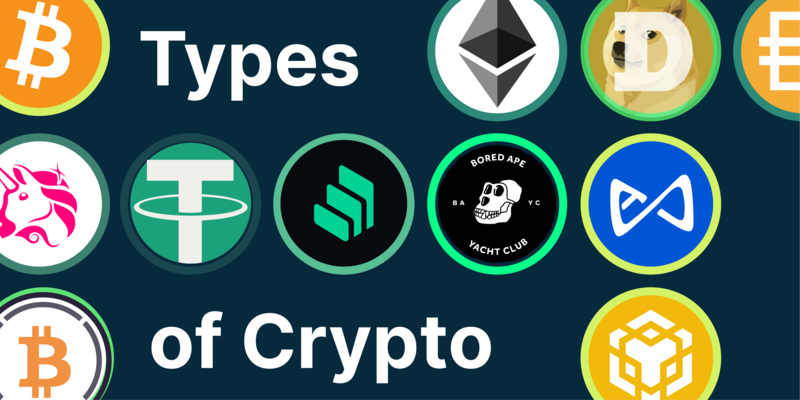
However, not all cryptocurrencies work in the same way. While all cryptocurrencies leverage cryptographic methods to some extent (hence the name), we can now find a number of different cryptocurrency designs that all have their own strengths and weaknesses.
Each of our coin data pages has a graph that shows both the current and historic price information for the coin or token. Normally, the graph starts at the launch of the asset, but it is possible to select specific to and from dates to customize the chart to your own needs. These charts and their information are free to visitors of our website. The most experienced and professional traders often choose to use the best crypto API on the market. Our API enables millions of calls to track current prices and to also investigate historic prices and is used by some of the largest crypto exchanges and financial institutions in the world. CoinMarketCap also provides data about the most successful traders for you to monitor. We also provide data about the latest trending cryptos and trending DEX pairs.
Are all cryptocurrencies based on blockchain
You might be familiar with spreadsheets or databases. A blockchain is somewhat similar because it is a database where information is entered and stored. The key difference between a traditional database or spreadsheet and a blockchain is how the data is structured and accessed.
Privacy coins are designed to keep your financial transactions confidential. While most cryptocurrencies operate on transparent public ledgers, privacy coins use advanced cryptographic techniques to hide transaction details such as wallet addresses and transferred amounts. These coins offer greater anonymity and are often preferred by users who prioritise data protection in an increasingly transparent financial environment.
Perhaps no industry stands to benefit from integrating blockchain into its business operations more than personal banking. Financial institutions only operate during business hours, usually five days a week. That means if you try to deposit a check on Friday at 6 p.m., you will likely have to wait until Monday morning to see the money in your account.
Yes, each cryptocurrency has its own unique blockchain, which is a decentralized, digital ledger that records transactions and facilitates the exchange of that coin. This allows for independent operation and management of each cryptocurrency.
By integrating blockchain into banks, consumers might see their transactions processed in minutes or seconds—the time it takes to add a block to the blockchain, regardless of holidays or the time of day or week. With blockchain, banks also have the opportunity to exchange funds between institutions more quickly and securely. Given the sums involved, even the few days the money is in transit can carry significant costs and risks for banks.
Of course, the records stored in the Bitcoin blockchain (as well as most others) are encrypted. This means that only the person assigned an address can reveal their identity. As a result, blockchain users can remain anonymous while preserving transparency.
Value of all cryptocurrencies
NFTs are multi-use images that are stored on a blockchain. They can be used as art, a way to share QR codes, ticketing and many more things. The first breakout use was for art, with projects like CryptoPunks and Bored Ape Yacht Club gaining large followings. We also list all of the top NFT collections available, including the related NFT coins and tokens.. We collect latest sale and transaction data, plus upcoming NFT collection launches onchain. NFTs are a new and innovative part of the crypto ecosystem that have the potential to change and update many business models for the Web 3 world.
The very first cryptocurrency was Bitcoin. Since it is open source, it is possible for other people to use the majority of the code, make a few changes and then launch their own separate currency. Many people have done exactly this. Some of these coins are very similar to Bitcoin, with just one or two amended features (such as Litecoin), while others are very different, with varying models of security, issuance and governance. However, they all share the same moniker — every coin issued after Bitcoin is considered to be an altcoin.
As with all currencies, the value depends on supply and demand. Bitcoin has value because there are high demand and low supply. Cryptocurrencies such as Bitcoin are available in limited amounts in the same way as precious metals such as Gold.
Cryptocurrency market capitalization (market cap) refers to the total value of a particular cryptocurrency that is currently in circulation. It is calculated by multiplying the current market price of a cryptocurrency by the total number of coins or tokens that have been issued. The total market capitalization of all cryptocurrencies for today is $3,483,735,942,412
Price volatility has long been one of the features of the cryptocurrency market. When asset prices move quickly in either direction and the market itself is relatively thin, it can sometimes be difficult to conduct transactions as might be needed. To overcome this problem, a new type of cryptocurrency tied in value to existing currencies — ranging from the U.S. dollar, other fiats or even other cryptocurrencies — arose. These new cryptocurrency are known as stablecoins, and they can be used for a multitude of purposes due to their stability.