Are all cryptocurrencies based on blockchain
The circulating supply of a cryptocurrency is the amount of units that is currently available for use. Let’s use Bitcoin as an example. There is a rule in the Bitcoin code which says that only 21 million Bitcoins can ever be created https://greenleafsupplements.com/. The circulating supply of Bitcoin started off at 0 but immediately started growing as new blocks were mined and new BTC coins were being created to reward the miners. Currently, there are around 19.86 million Bitcoins in existence, and this number will keep growing until the 21 millionth BTC is mined. Since 19.86 million BTC have been mined so far, we say that this is the circulating supply of Bitcoin.
Play-to-earn (P2E) games, also known as GameFi, has emerged as an extremely popular category in the crypto space. It combines non-fungible tokens (NFT), in-game crypto tokens, decentralized finance (DeFi) elements and sometimes even metaverse applications. Players have an opportunity to generate revenue by giving their time (and sometimes capital) and playing these games.
Each of our coin data pages has a graph that shows both the current and historic price information for the coin or token. Normally, the graph starts at the launch of the asset, but it is possible to select specific to and from dates to customize the chart to your own needs. These charts and their information are free to visitors of our website. The most experienced and professional traders often choose to use the best crypto API on the market. Our API enables millions of calls to track current prices and to also investigate historic prices and is used by some of the largest crypto exchanges and financial institutions in the world. CoinMarketCap also provides data about the most successful traders for you to monitor. We also provide data about the latest trending cryptos and trending DEX pairs.
Are all cryptocurrencies mined
The competition between these blocks continues until the next block is mined on top of one of the competing blocks. When a new block is mined, whichever block came before it is considered the winner. The block that is then abandoned is called an orphan block or a stale block, which causes all the miners who picked that block to switch back to mining the chain of the winning block.
Imagine a global digital ledger where every cryptocurrency transaction is recorded. Mining ensures this ledger stays accurate and secure. Miners use specialized computers to solve puzzles (essentially guessing numbers) to organize and confirm pending transactions. The first one to solve it gets rewarded with cryptocurrency.
As we’ve seen, pending transactions on a PoW network are ordered and added into blocks by miners who compete to solve puzzles using specialized mining hardware. The first miner to find a valid solution can broadcast their block to the blockchain, and, if the validating nodes accept their block, the miner receives the block reward.
Bitcoin mining has grown fiercely competitive, dominated by industrial mining farms equipped with ASIC (Application-Specific Integrated Circuit) miners. It’s very difficult for at-home miners to compete with these large-scale operations.
It’s important to note that Bitcoin mining hardware can be expensive, loud, generate heat, and consume a significant amount of electricity. You should keep these factors in mind if you’re planning to set up mining hardware in your home.
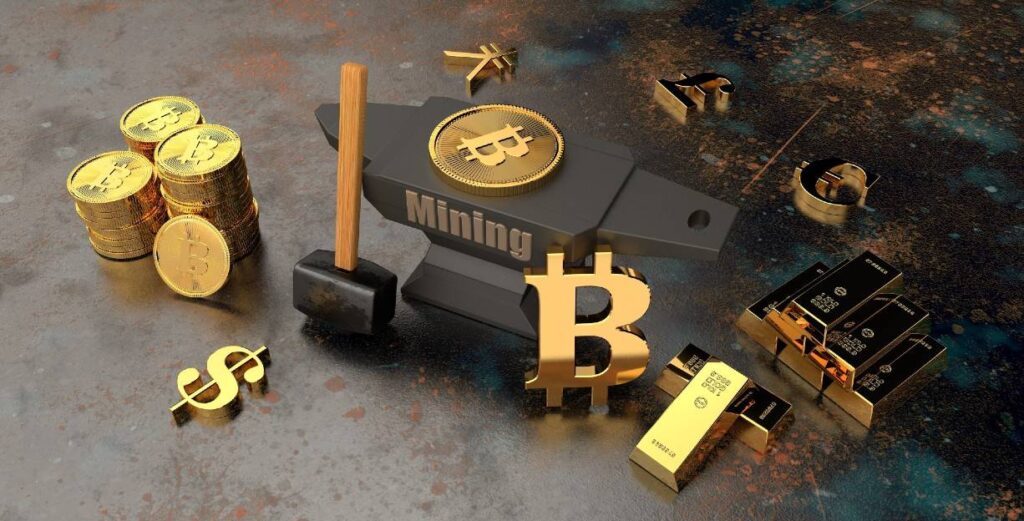
What are all the cryptocurrencies
The first chain to launch smart contracts was Ethereum. A smart contract enables multiple scripts to engage with each other using clearly defined rules, to execute on tasks which can become a coded form of a contract. They have revolutionized the digital asset space because they have enabled decentralized exchanges, decentralized finance, ICOs, IDOs and much more. A huge proportion of the value created and stored in cryptocurrency is enabled by smart contracts.
Welcome to CoinMarketCap.com! This site was founded in May 2013 by Brandon Chez to provide up-to-date cryptocurrency prices, charts and data about the emerging cryptocurrency markets. Since then, the world of blockchain and cryptocurrency has grown exponentially and we are very proud to have grown with it. We take our data very seriously and we do not change our data to fit any narrative: we stand for accurately, timely and unbiased information.
In January 2024 the SEC approved 11 exchange traded funds to invest in Bitcoin. There were already a number of Bitcoin ETFs available in other countries, but this change allowed them to be available to retail investors in the United States. This opens the way for a much wider range of investors to be able to add some exposure to cryptocurrency in their portfolios.
The market cap of bitcoin and other major cryptocurrenciesare are listed below from largest market capitalization to smallest. Cryptocurrencies are also known as coins or virtual currency. The value of bitcoin is growing with time and is the largest currency by market cap currently. The currency data below is updated once every five minutes with the latest market cap data. Exchange rates for the currencies are shown in U.S. dollars. New coins are being brought to market via initial coin offerings frequently so expect the list of cryptocurrencies below to grow.